How a streamer can accept tips without getting banned by the platform
Why platforms block streamers, and how a streamer can accept tips without getting banned by DonationAlerts, Donatty or DonatePay.

Product Manager at Donatty
Published:
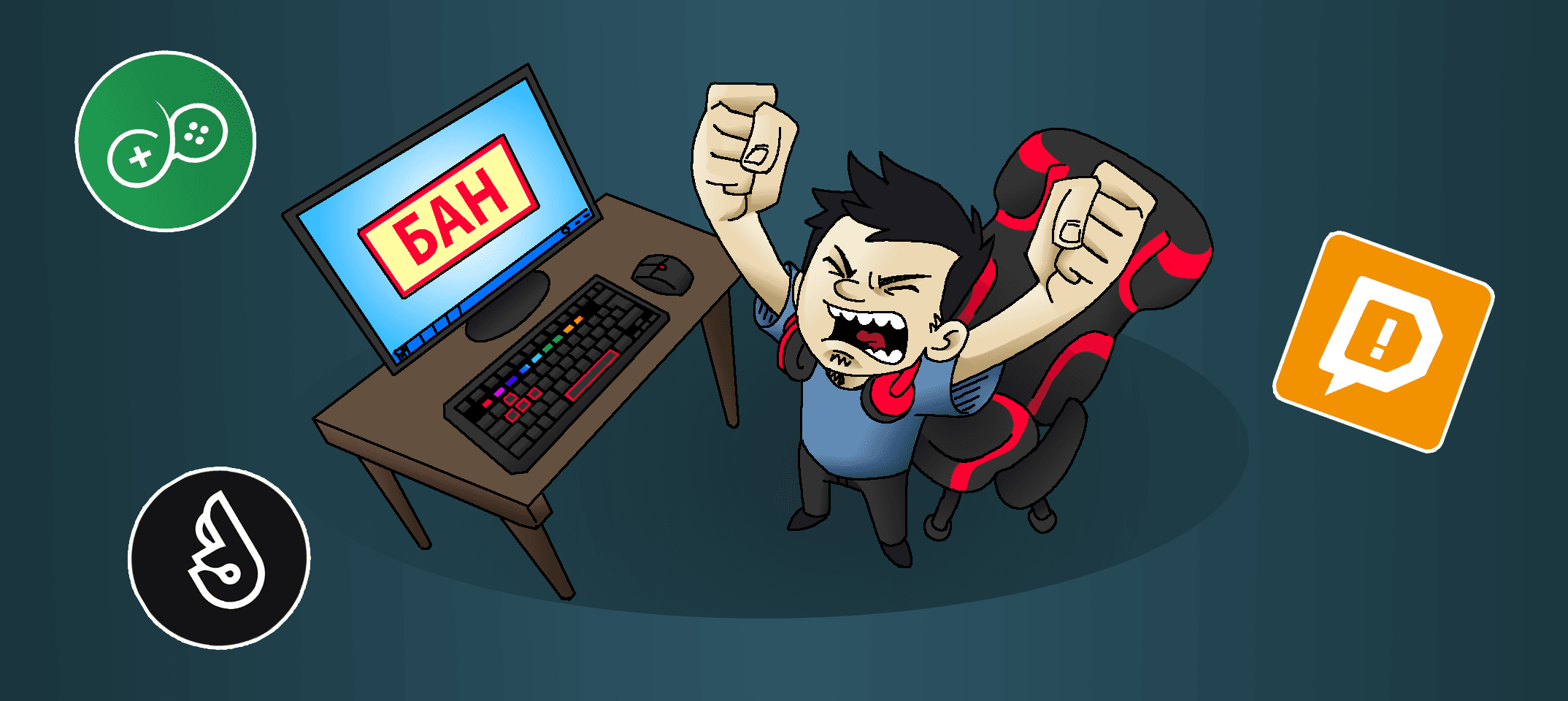
Picture a streamer sitting at home, playing games, streaming, talking to the audience, receiving tips. And suddenly a ban arrives from the platform, with all funds frozen for 30−90 days. The streamer is rightly outraged, records an angry video, argues with the support team… So what went wrong?
My name is Yura, and I’m a product manager at the tipping platform Donatty. Now I’ll tell you why tipping platforms ban users and how to avoid it.
I base my conclusions on how our platform works, but I’m sure it is much the same for our colleagues in the market.
How fraudsters use tipping platforms for their own ends
Account blocks happen on all platforms without exception, both in Russia and abroad. And obviously, banning a user is shooting yourself in the foot for a platform: such a user not only stops accepting tips (and so stops bringing in money) but also gets angry and actively creates a negative image of the platform. A platform is hardly going to ban anyone at its own loss, is it?
To understand why platforms do this, we need to work out who the platforms take streamers for.
From a payment service’s point of view, tips are small gifts or donations that some individuals send to others. The service has to charge the donor’s card, hold the money for some time and then, at the recipient’s request, transfer it wherever they say.
This process suits fraudsters well. They have somehow obtained someone else’s card details and now want to charge funds to that card and then move them somewhere they will be hard to find. Let’s leave aside how the card details were obtained: it can be social engineering (calls from Sber’s “security service”), phishing pages (fake online stores, for example) and much, much more.
In our case, they disguise the charge to someone else’s card as a tip and then withdraw the money through several dummy wallets or cards.
Why fraudsters are harmful to a platform
Fighting fraudsters is an important task that a platform is obliged to handle. It matters not only for moral and ethical reasons (stealing is bad, helping to steal is also bad) but also for perfectly practical ones.
After the money has been charged to the card and withdrawn to who-knows-where, the victim turns to their bank (the issuing bank) and explains that they did not actually tip the streamer Frodo777 and that their card details were stolen. And asks for the money to be returned to their card. This reverse payment is called a chargeback.

The issuing bank turns to the acquiring bank, which carried out the charge to the card, asking it to explain the situation. The payment system closely watches this communication and steps in if needed.
The acquiring bank turns to the tipping platform, which then explains who tipped whom and where the money went. Depending on exactly how the payment was made, the platform either returns the money to the victim or does not. If the victim then goes to the police, the platform also provides law enforcement with all the data about the transaction, the account owner and where the money went.
But the platform’s problems don’t end there. If the number of chargebacks stays high, the acquiring bank the platform works with, and the whole chain of intermediaries between the bank and the platform, start putting pressure on it. First, numerous documents are requested about how the platform plans to fix the situation, then card acceptance rates go up, and then the platform may even be cut off from accepting payments altogether, which means at the very least suspending its operations.
How platforms fight fraudsters
The platform’s main task is to minimize chargebacks, and for that it needs to reduce the number of fraudsters using the platform.
To solve this, platforms use anti-fraud systems — special programs that detect fraudsters with the help of many rules (and sometimes machine learning).

The specific rules an anti-fraud system works by differ from system to system, but the general principles are these:
Reliability of the recipient/payer. A big channel, many viewers, a reliable tipper — all of this works in the streamer’s favor.
Speed of the tip and of the withdrawal. A tip withdrawn immediately after it is received is very suspicious.
The tip amount and the presence of failed tip attempts. On a channel with 100 followers, a tip of 40k rubles is suspicious, and if there are many failed earlier attempts to tip with this card, it is very suspicious.
It should be said here that even the popularity and reliability of the recipient cannot completely protect from suspicion. Situations are increasingly common where fraudsters collude with streamers and mix their payments into the streamers’ regular flow of tips.
If, taking all the factors together, the platform considers a user suspicious, it temporarily freezes the funds and examines their payments in “manual mode”. If the suspicions are confirmed, the platform usually freezes the wallet for a considerable period — from 30 to 180 days. During this time all victims have time to request chargebacks, and law enforcement can take the measures provided for in such cases.
If no chargeback requests come in, it means the platform made a mistake. It apologizes to the user and unfreezes the account.
What rules a streamer should follow so that the platform doesn’t block them
The main reason a tipping platform bans streamers is suspected fraud. Most often it is exactly a suspicion, because the platform has neither the resources nor the authority to collect evidence and accuse anyone. That is why sometimes (though quite rarely) perfectly ordinary, unsuspecting streamers get banned as well.
To avoid ending up among them, follow these rules:
Don’t collude with fraudsters. It will be discovered very soon anyway, the account will be blocked, and in a criminal case you will turn out to be an accomplice.
Don’t withdraw tips immediately after receiving them. It is important for a fraudster to withdraw the money before the victim requests a chargeback, and you are in no hurry.
If you received a strange large tip, with no idea what it is for or who it is from, contact support and ask them to check it. Usually a manual check makes it possible to identify an illegal payment and return the funds to the victim. If it was a fraudulent transaction, there will be a chargeback on it sooner or later in any case.
P.S. How Donatty deals with fraud
We can’t disclose the specific details of the process, but the general principles are these:
Zero tolerance for fraudsters. Despite a very small team, we do everything we can to keep them from using our platform: we learn ourselves and improve our anti-fraud.
We open a separate wallet for each user (under Federal Law No. 161-FZ). Our payment partner is a bank with a Central Bank of Russia license, and it identifies the wallet owner through the state information system SMEV.
If we have frozen a wallet, we always check everything manually together with our payment partner.
If there are doubts, we ask the streamer for explanations, talk to them and look into the situation. Fraudsters often try to deceive us, but we hold our ground.
If we managed to freeze the stolen funds, we always satisfy chargeback requests in full.
Donatty public API: your own bot for tips and goals
Your channel's tips, goals and tipper leaderboard can now be pulled into your own program: a bot, your website or another service. Here is what you can build and where to start.
Read more
Donatty ambassador program: free PRO plan
Tell your audience about Donatty — and we give you the PRO plan. Any channel with 100 or more followers qualifies. Here is what PRO includes, what you need to do and how to join.
Read more
November 7 release: fee compensation and two new alerts
Fee compensation is now visible in Finances, and tips with compensation and tips with media can have a separate alert. We show it in a video and explain how to set it up.
Read more